The most significant part of the renovation of Grenfell Tower was the addition of external cladding. This consisted of aluminium sheets bonded to a central plastic (polyethylene) core. In his report to the public inquiry, Professor Luke Bisby said evidence “strongly supports” the theory that the polyethylene material in the cladding was the primary cause of the fire’s spread. “The ACM (aluminium composite material) product on Grenfell Tower incorporates a highly combustible polyethylene polymer filler which melts, drips, and flows at elevated temperature. The polyethylene filler material is expected to release large amounts of energy during combustion”.
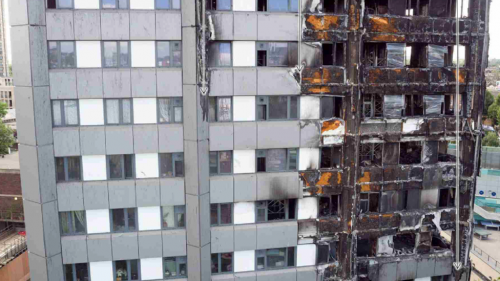
His report also suggests that vertical cavities within the cladding structure played a role in the spread of the fire, as did the insulation, although evidence was inconclusive. A number of other flammable materials, including a polyurethane polymer foam insulation board which pre-dated the refurbishment were also present and may have contributed, Prof. Bisby found. In her report, fire expert Dr Barbara Lane identifies combustible materials used in the refurbishment of the tower’s windows as another factor in allowing the fire to spread. The Grenfell Inquiry has also heard that the building’s smoke extraction system was not working, and that firefighters experienced problems with the water supply because there was no ‘wet riser’ – a water-filled pipe running up the building to be used in the event of fire. Giving evidence to the inquiry, Dr Lane said exposed gas pipes installed in 2016 were another contributory factor, while none of the flat doors met current fire resistance standards. Work done on the lifts in 2005 and 2012-16 left them unfit for evacuating vulnerable residents and aiding the emergency response, Dr Lane said.
Next: Survivors accounts